“Everything Feels Like the First Step, Constantly, All the Time”: A Conversation with Painter Skylar Hughes
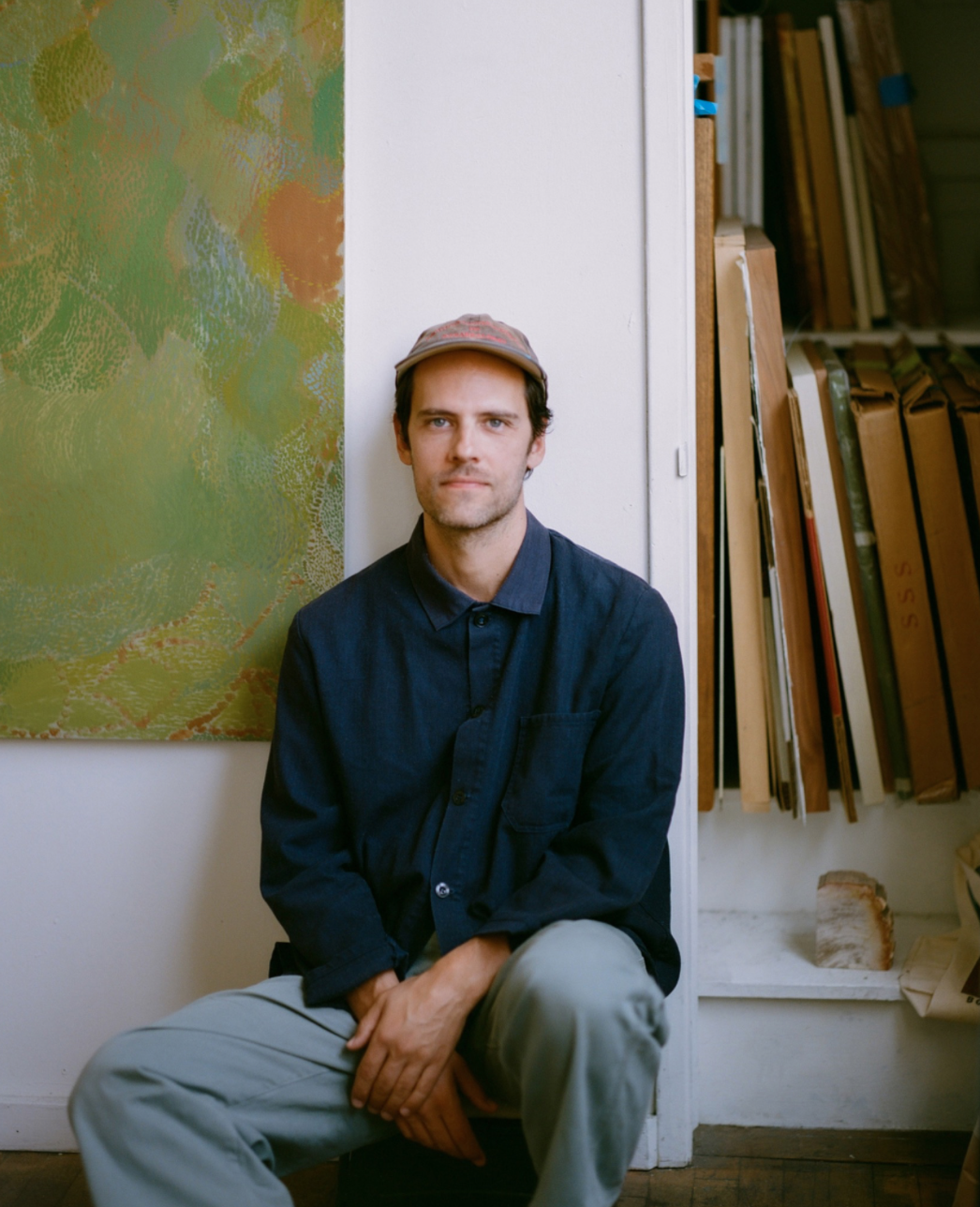
Portrait by Sala Johnson
I recently had a conversation with painter Skylar Hughes, whose work I’ve been following since 2018. He recently had a new show titled Lost Mind in the Tall Grass. It was up at La Loma Gallery in Highland Park. His pieces display brilliant colors and he is an incredible and incredibly thoughtful artist. Skylar and I had a very Highland Park morning as we grabbed cold brew at Kumquat where Skylar ran into some artists he knew. We walked up to Occidental College, sat on a bench under a tree, and talked about Skylar's work, process, and what might be his downfall. (Nothing will be Skylar's downfall, that was just a hook to get you reading.)
Ryan: How did this show with La Loma Gallery come about?
Skylar: My work is represented by them. They started off as a project space five or six years ago. They would have the space open to artists represented with other galleries to do a project-type show for them. I think it was a way for Kirk [Nelson, La Loma Gallery founder], who has been in the LA art world for the last twenty, thirty years, to get some of his friends and people whose work he likes into the mix of the gallery. Through the project space format he was able to build up a roster of represented artists, I think there are eight or nine people now.
Ryan: Oh, nice.
Skylar: I've been on the roster for a couple of years. There was a time when it was just me and three other people.
Ryan: I remember I saw your show in 2019 at The Lodge. Were you represented when you did that show?
Skylar: I did two solo shows with Alice and Nils at the Lodge, but they didn’t really represent artists. They’re back in Australia now.
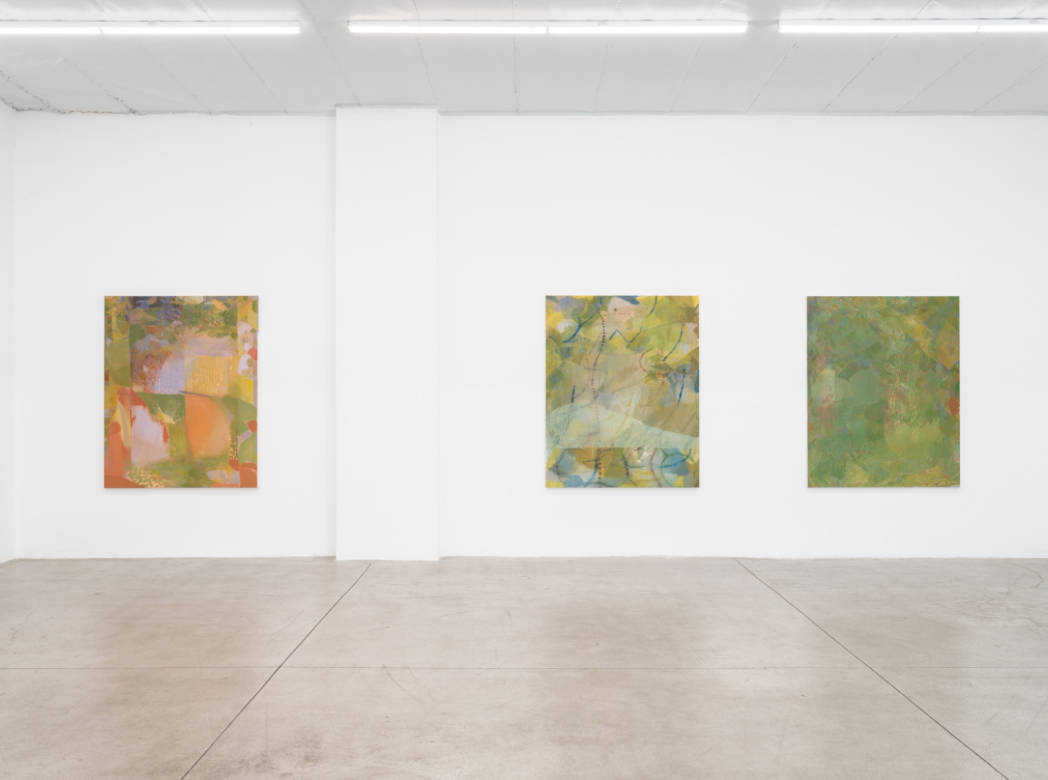
Skylar’s work on display at La Loma Gallery
Ryan: When did you first start painting?
Skylar: I went to Hartford Art School in Connecticut. I actually didn't study oil painting (what I do now), I studied illustration. I studied a lot of things - art history, printmaking, drawing, a bunch of different kinds of painting - watercolor, egg tempura, oil. I learned a ton of stuff in school, but, for me, school was about meeting the people who are really near and dear to me now.
Ryan: Do you still keep in touch with artists who you went to school with?
Skylar: Yeah!
Ryan: Oh, awesome.
Skylar: That was a foundation and the school was very rooted in foundations, like technique, and an old school method of building composition. It was a bit rigid for me and I wanted to do what I wanted to do, maybe as anybody would, and especially if you're younger. I resisted and fought a lot of what was happening, which I think served me well because it kind of pushed me to go a little bit further into territory that felt like mine. I didn't really start painting until after college though. I was given a show in New Britain at the New Britain Museum of American Art.
Ryan: Hard hittin' New Britain.
Skylar: Hellll Yahhh. Yeah, exactly. I entered an etching of a dog on top of a hill into a juried show at the museum. The juror, my now good friend Sue, was the director of the Hillstead Museum in Farmington, CT, a museum in a house that's modeled after Jefferson’s home, Mount Vernon. It's an amazing place full of impressionist artwork. That etching won a prize and got the attention of the museum.
Ryan: When you said that thing about building, do you mean specifically within the painting, building things out?
Skylar: Yeah, I think so. A very traditional draftsmanship-forward kind of way of building where you have small sketches, and then you do a full final drawing of the final thing that you're gonna do, so that you can work out everything in the image before you go to the main event of actually making it, so that you're primed and tuned into it.
Ryan: Yeah.
Skylar: But that, for me, felt too much like executing. At the time, I didn't really realize it, but I think the biggest thing for me now is that the paintings I make are very much about the painting process and about that time where I tune into the painting, but it's the painting and whatever's happening with the painting. I sometimes will have a little drawing prepared, but it's almost like as soon as the first thing happens on the canvas, the drawing is out the window because it's a totally different thing. I try to let the painting happen and let the image emerge through going at it.
Ryan: Yeah.
Skylar: I still build, but I don't build it in the same way. I'm kind of building or finding “it” as the painting is being made, and that search or effort becomes what the work is about.
Ryan: Yeah.
Skylar: I try to let the image emerge and be responsive to the paintings. For this show, one of the biggest elements of newness for me is their scale. This is the first group of these five foot by four foot paintings. I've done some large ones before, but not really in series like this. I feel like I'm always just beginning, but that's always the thing. Everything feels like the first step constantly, all the time, you know?
Ryan: Yeah, I know how that is with writing. It always feels like you're just starting over every single time.
Skylar: Yeah, it’s kind of annoying.
Ryan: It’s really annoying.
Skylar: But it’s cool. I think that’s the place to be because if you know what you’re doing, where’s the satisfaction of exploring, and figuring out the mystery, and the difficulty, and all the challenges of that? I don’t know. Maybe that’s... my downfall.
Ryan: I think it is the journey of it. I also imagine if you have these huge canvases, do you ever get to a place where you’re ever like, “You know what, I’m working on this and I don’t think this is right?” Are there ways that you can figure out a way to make it what you want it to be?
Skylar: I think for the most part, it’s never right. And that’s why you keep going.
Ryan: Yeah. Wait, that part. I love that.
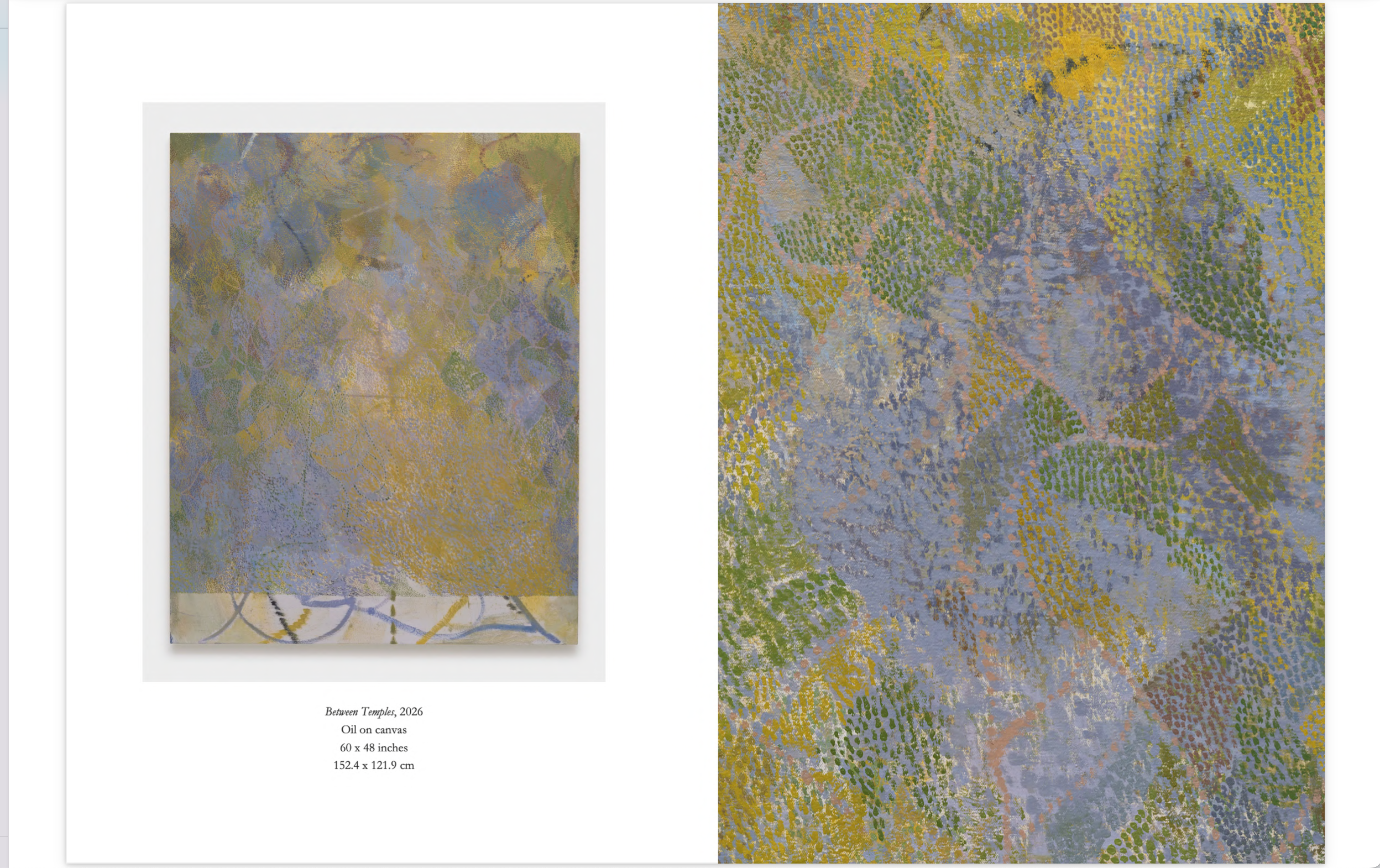
Skylar: And I think it’s just believing that you can get it there. And I think time is a big factor in painting in general. The small dots, all of that is individual marks. People were asking if I use some kind of way to–
Ryan: Who asked that? I’m gonna talk to them. I’m gonna sit them down like this–
Skylar: A few people. It made me think, “Wait, these people might think I’m crazy.” Because it takes time, you know?
Ryan: Yeah.
Skylar: The paintings have always tried to point to presence. And I think nowadays, life is such a whirlwind, it’s just hectic. I don’t know if that’s because it’s 2026 and I’m the age I am. I’m trying to hold all this stuff together. Life is busy, life is happening and I think a lot of times, in the regular day-to-day, I feel like I’m not here for it. The painting practice is a way to be super present. It’s not about executing a vision, but allowing whatever’s happening in the moment to arise and to work with that. It helps me be there with it. Painting slows things down. I think the slowness is where people, similar to meditation, are more aware of the life that’s happening outside of the structures of everyday life that you just have to do.
Ryan: There is something about being able to control the speed, control the process, that is so instructive. Sometimes I’m in the process of things and I’m like, “Man, I'm getting older, I’ve got to keep moving, speed this along.” And then I’m like, “No, I think it needs to be at the speed that it’s at,” you know?
Skylar: Yeah, I feel that. This show for me was really stressful, making it.
Ryan: What was the time period of working on these?
Skylar: The show date was pinned down at the beginning of the year, which is normal, but I had one painting ready. I was like, “I can do this, but it’s gonna be really hard” because the paintings take a while, especially with how they’re being made right now. There are a few paintings in the show that have had twenty, twenty-five hours of work on them, and that’s a fast painting, but within that twenty-five hours of work, it’s taken about six months for that to happen. That time is part of the working process of the paintings, but it felt like a really tight turnaround for me. I don’t keep track of the –
Ryan: Yeah, you’re not starting a stop watch –
Skylar: Yeah. I think at one point I was interested in that, but it becomes more about setting the cursor in this particular spot. It just takes me a little bit out of the process.
Ryan: Do you have to do certain things to get in the mode of painting? Are you like, “Okay, now I’m in the headspace where I can work.”
Skylar: I need a lot of freedom for the process to happen, insofar as even if on monday and thursday night there’s something, I’m thinking, “Oh, the studio time is compressed” and that that's ridiculous because so many people have so many other responsibilities. I do too, I work and do all this other stuff –
Ryan: I told this to somebody the other day. Somebody said, “I don't have time to write.” I said, “You have to give your time to the work.”
Skylar: Yeah, as a priority. It’s hard to do. There are a lot of things in the mix and it requires a lot of other support. To paint, I do like a studio clean up. I look at stuff in the morning. I like to make coffee at the studio and spend time really looking. In the process of putting on a show, the work days are super long and I’m hopefully pretty embedded in the practice and it becomes more about staying in it.
Ryan: Yeah.
Skylar: It’s maybe similar to running in that if you don't run, it’s really hard to do it, and then once you get in the flow, it’s part of what you're doing and all the things that running is good for happen a little bit quicker, like clearing your mind and feeling healthy and energized. The same thing kind of happens in the studio. I get into studio mode and start looking at things differently, and thinking about things differently for the paintings. This might be woo-woo or something, but I feel like I'm listening really hard to the paintings. It's kind of a heart opening practice in some ways. It’s funny to say, “I’m the studio mode” and it also means I’m just really sensitive. It’s a funny, interesting, beautiful place to be emotionally because I feel a bit open and raw to allow the paintings to happen.
Ryan: No, I really admire this. It must be so hard to get to that place, especially in L.A. I feel like everywhere I go, people only think about money and status, or there’s a lot of that. It’s that idea that you have the show coming up and you're gonna sell paintings at the show, but you have to keep it focused on the work and not be thinking about the monetary end of it. Is that tough to balance?
Skylar: I’m in this extended period of just seeing. I want to make paintings, that’s a priority for me. Even through like all of this major stress of working, it’s hour fourteen in the studio, I brought lunch, and I brought dinner, I have a snack and an extra coffee, and it’s exhausting, and a little intense, but then I’m standing back and I'm like, “Oh wait, I love to do this. Why am I so stressed?”
Ryan: Yeah.
Skylar: Most of the show happened over the summer, the last few months. And some of that waiting time that I was saying before, it gets eliminated a bit. Because the paintings need work, and there's only so much time, so I'm going to make this decision right now and trust it and follow through with it, as opposed to – without the deadline, stuff moves slower, I will have weeks to make that decision. I think with this show, I took photos of paintings in progress and I’ll go back to them and say, “Oh, fuck, five days ago, this painting was done,” but now I’ve fucked it up entirely, but it's also a whole new painting.
Ryan: Right.
Skylar: I couldn’t see it then because it was too new and it wasn’t cemented in my mind in the way that a little bit of time can help show.
Ryan: And so then you figure out what the next version of that painting can be? Or do you ever go back and try to recreate what you did?
Skylar: I think that's something that I’ve never been able to do, even having a painting that I love, and think is strong, and want to make work. I’ve never tried to recreate a work, but pulling the elements that I think are successful out of one painting and putting them into another has never really worked for me because it’s always a whole different set of parameters based on it just being a new thing.
Ryan: I don’t think your pieces are similar at all, I would never say that. I was going to say, I feel in the 2019 era, your work had more peach colors and almost an ethereal energy and now it’s down to earth, there are a lot of greens. Has that been something in your life or is that just the work?
Skylar: I think probably both, and all of it. I think for this show, there is a lot of green. I think for my work, there are seasons of time and I think that this show is a shorter period of time. It’s in a similar pocket with color because I think the way that I work is very intuitive and I’m interpreting things on a subconscious level. I am filtering my experience and it ends up in the paintings. The job that I do, I travel a bit, and I am in different places, usually woodsy, nature places. When you spend so much time in a place like L.A., it becomes a little bit fuzzy or you stop paying attention to things in the way that when you’re traveling, everything feels new and fresh and exciting. When I come back to L.A., it feels very distinct. I have a bit of sharpened eyes. I’ll go on my walk or to some of these places that I like to go to just to feel like I’m in a place. I wasn’t thinking about it, but this little piece of this tree or the foliage or this pathway, it’s like, “Oh, that is that painting, I just didn’t know it at the time.”
Ryan: I see you around Highland Park and it’s the kind of thing where I don’t think until I saw the paintings that I felt like I was having a conversation with you in a way that I learned more about where you’re at personally from seeing the work you’re doing. Based on these new paintings, it feels like maybe there is more weight on your shoulders and that came across. It’s a great thing about a painter’s work, where you can kind of see where they’re at personally. Are you thinking of the work as a representation of you or are you telling stories, saying how you feel about certain things with the work?
Skylar: I think both. The work isn’t autobiographical, but it is how I’m expressing my experience of my life in this time that we’re all experiencing. I think that this show is the most internal. There’s a lot of felt experiences that are meant to be expressed or represented, trying to represent how it feels to be connected to a shared experience in nature or memory or dream or a more collective unconscious. Some of the older work, like lighter work, had a lot of representational imagery, like leaves and trees and sky and field and grass. I think all that was very apparent in the imagery of those paintings, whereas now I'm maybe being more suggestive and it's definitely still in the paintings because that's the stuff that I love to see, but less obvious. I think abstraction is about feeling because there isn't an identifying marker of something in reality to connect to and identify with. It becomes about how one is feeling while engaging with a painting, and that’s what I’m dealing with in the day-to-day of making them.
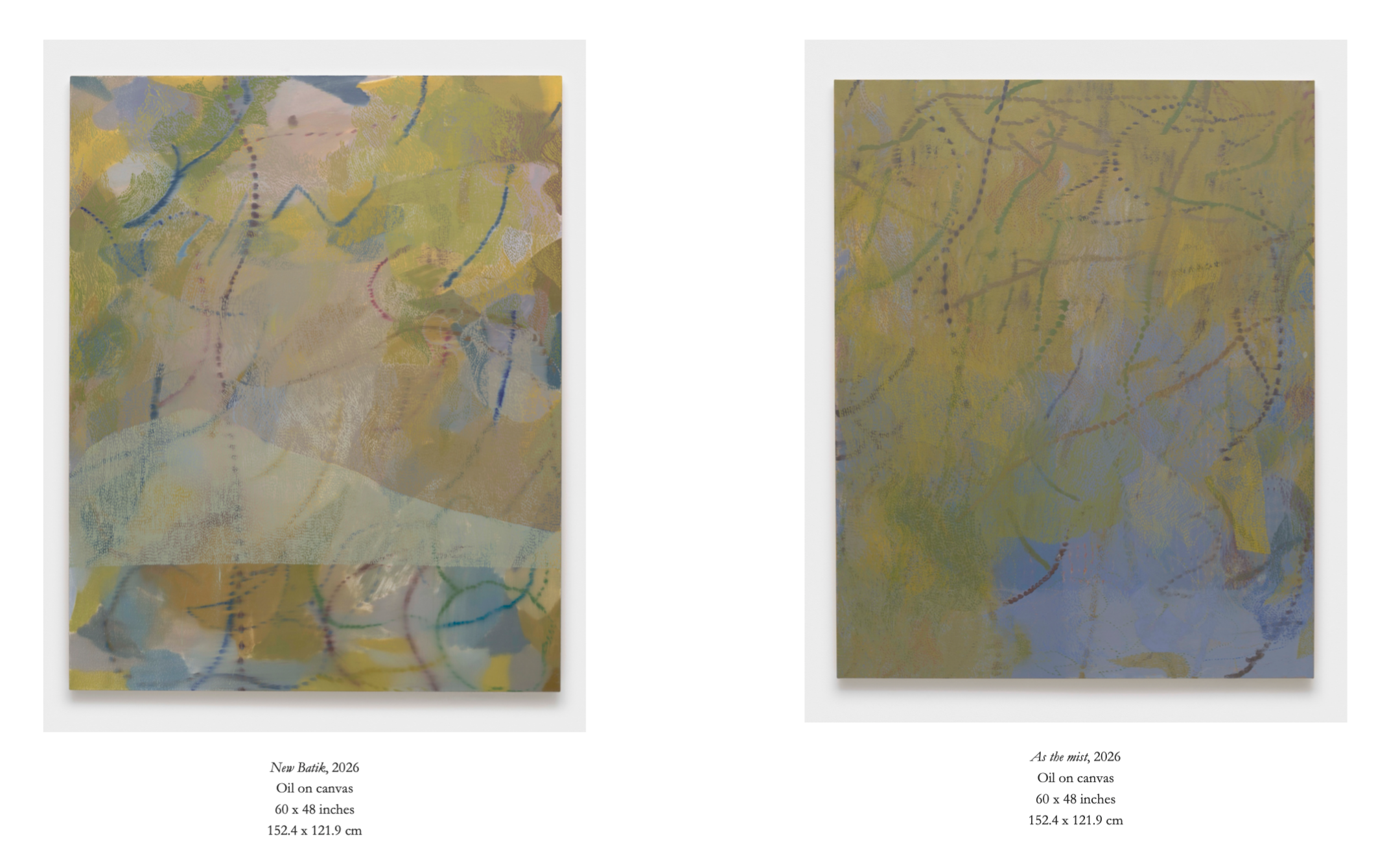
Ryan: In the painting New Batik, I love in the corner, there’s this tiny white space. How did you get that effect?
Skylar: That's paint just sanded down. Anything that I'm doing is never going to be the last thing that I do is never going to be the last thing that I do with the painting. The surface quality is a huge thing that I’m drawn to in art. I love paintings where incidental things happen to the surface that are not a hand with a brush applying directly, but maybe there's some kind of mediated device in between that, so it's less about the hand and more about something that happened and maybe there are elements of chance. The dots were originally always supposed to be about surface quality. You can see what's underneath and what's on top. I have always kind of sanded or pulled the paint around. I'm looking to do stuff to the surface of the painting that is a little bit less direct with my hand.
Ryan: Right.
Skylar: Like putting paint down and then sanding it to mute the color a little bit, to soften the color, and then also to pronounce the physicality of the canvas, the weave of it.
Ryan: Yeah, it all always feels extremely intentional. It feels like both exacting and never rigid. It always feels open and yet intentional. That's what I love about your work.
Skylar: Thanks.
Ryan: I loved the technique with the dots. Was that something that you started with one painting and then decided to explore further?
Skylar: It's funny, I'm just now in the dot world.
Ryan: Is this the new thing?
Skylar: No, I think it's just what's happening now. It started as a way to be direct with the painting. And it was a way to work with color in a more vibrant way. I think a lot of the earlier work is really pushed around a lot, almost dyeing the canvas. The dot was almost the opposite of that.
Ryan: It's like showing your work in a way.
Skylar: Yeah, it becomes a record of itself.