A Brief Interview with Hannah Smart
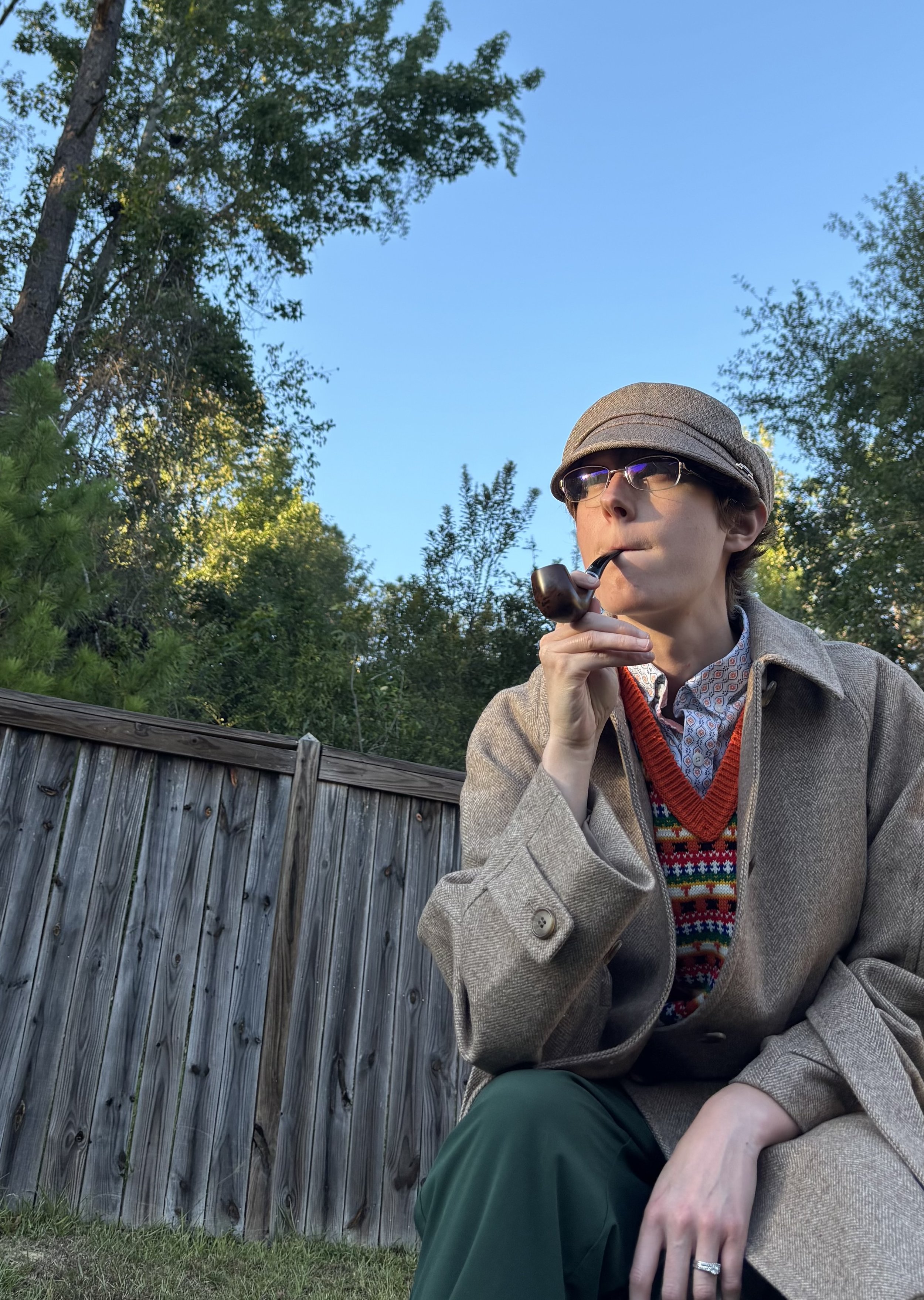
Hannah Smart will be reading at the January 16 edition of The Difficult to Name Reading Series
I loved your essay for the Los Angeles Review of Books in which you diagrammed the 900-word sentence in David Foster Wallace's short story, "Mr. Squishy." You point out that Wallace is so adept at grammatically depicting statis and I have found that Wallace's fiction -- while heady -- is always moving the story or character or emotional throughline forward, as opposed to other "difficult" writers who I think are just difficult for the sake of being difficult, if that makes sense. How do you approach the idea of difficulty in your own work as well as in the fiction that you chose to read?
I adhere to the philosophy that all art and especially literature should be high-effort and high-payoff. I love difficult works where you really trust that the writer knows what he’s doing—where you can sit back and yield to being sort of authoritarianly led through a maze you could never navigate on your own. There’s something almost religious to that feeling. Wallace’s stuff has it, as does Nabokov’s, DeLillo’s, Woolf’s, and the best stuff by Helen DeWitt. When I make a choice in my own writing that will be an impediment to readerly understanding, I always ask myself what the payoff will be. The payoff can be cheap—maybe it’s just the punchline to a joke—but it should be commensurate with the amount of effort it cost.
I'm so excited for your debut novel, Meat Puppets! What was the process like writing that book?
In early 2023, my husband and I were watching a lot of art films, as well as a lot of behind-the-scenes film documentaries, and one thing we kept coming back to was how creepy actors are. The ability to not just lie in front of the camera but essentially live a lie—embody a persona that is not one’s own—seems like it should render someone fundamentally sleazy and dangerous. We got to wondering how anyone could watch, for example, Philip Seymour Hoffman’s performance in The Master and ever trust anything Philip Seymour Hoffman said or did ever again. So that was the basic premise, and after that, the novel was surprisingly easy to write. My dad’s a finance guy, and I’ve always had a layman’s understanding of financial stuff, so the idea of a fake stock market surrounding actors felt like the natural direction to take it. The first draft took about a year to write.
2026 has just started and a lot of people have goals and resolutions. Why do you think people do that?
I think the average person is in some way dissatisfied with how their life is going, but, paradoxically, also pretty resistant to making concrete changes to their routine. I suppose the new year is an excuse to uproot the default setting—if you’ve had to switch to writing “26” at the end of all your dates, why not also start going to the gym, you know? I figure that’s probably also why most new year’s resolutions sort of revert by March or so—by then, the novelty’s worn off (or at least, this has been my experience).